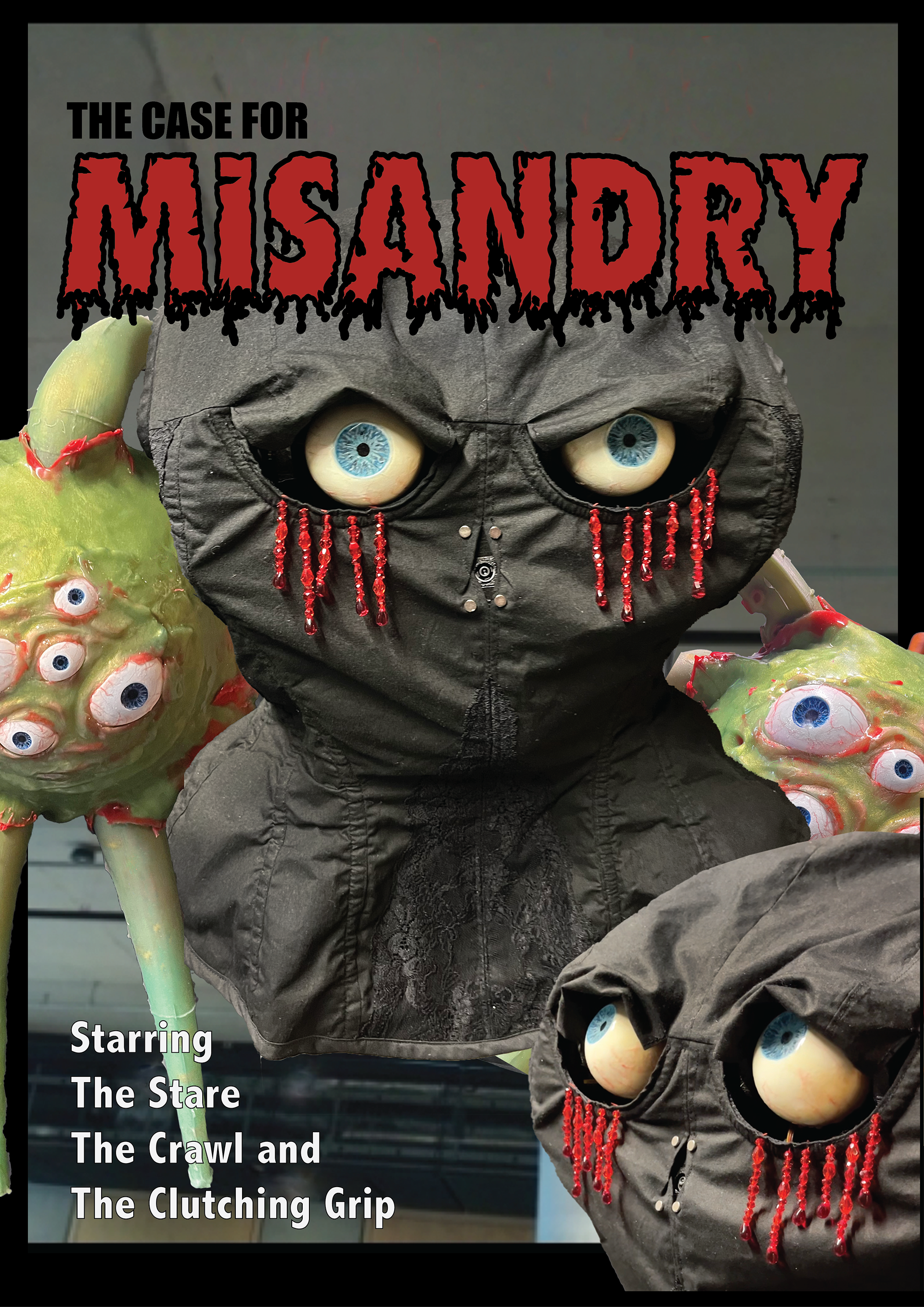
Building on the foundations of Monstrous Vision, this research-led body of work explores the intersection of wearable technology and feminist resistance. Comprising of three interactive garments, The Stare, The Clutching Grip, and The Crawl, the project employs AI face-tracking, soft robotics, and pneumatic actuation to confront the systems of objectification and gender-based violence directed at women’s bodies. By merging traditional corsetry with silicone casting and 3D modelling, I’ve moved away from "neutral" utility toward a practice of Critical Engineering. Here, technology is not a seamless assistant, but a tool for refusal and monstrous embodiment, turning the "abject" into a site of agency and power.
Software: Python (OpenCV), Arduino IDE, Fusion 360, Adobe Premiere Pro.
Hardware: ESP32/Arduino, Raspberry Pi, Servo Motors, Pneumatic Solenoids, Air Pumps.
Materials: Silicone, 3D Printed PLA, Traditional Corsetry.
Techniques: Soft Robotic Actuation, Pattern Cutting, Silicone Casting, PCB Prototyping.
The Stare | AI, Vision & Active Confrontation
The Technical Feat: Moving beyond simple detection to active confrontation.
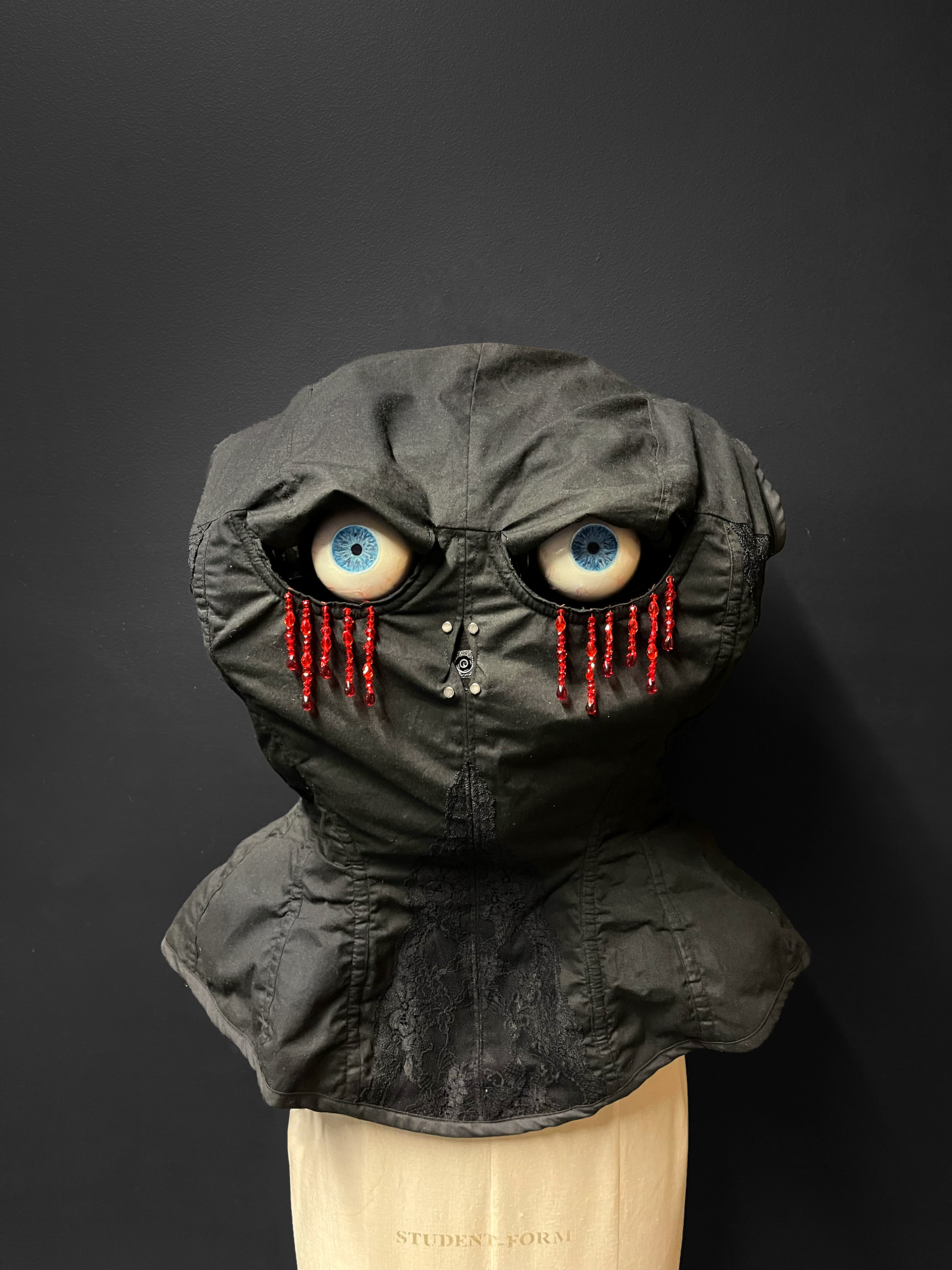
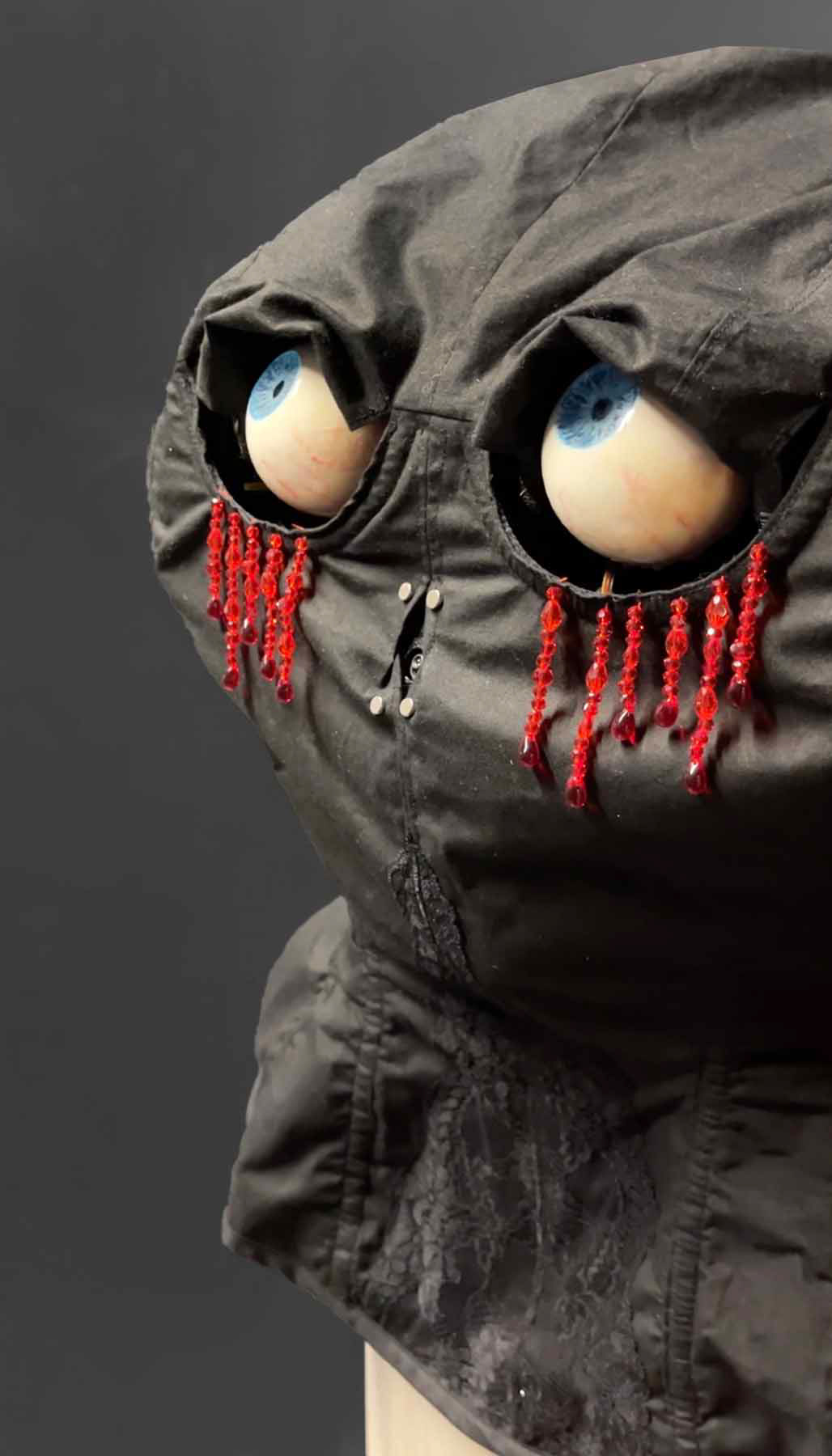
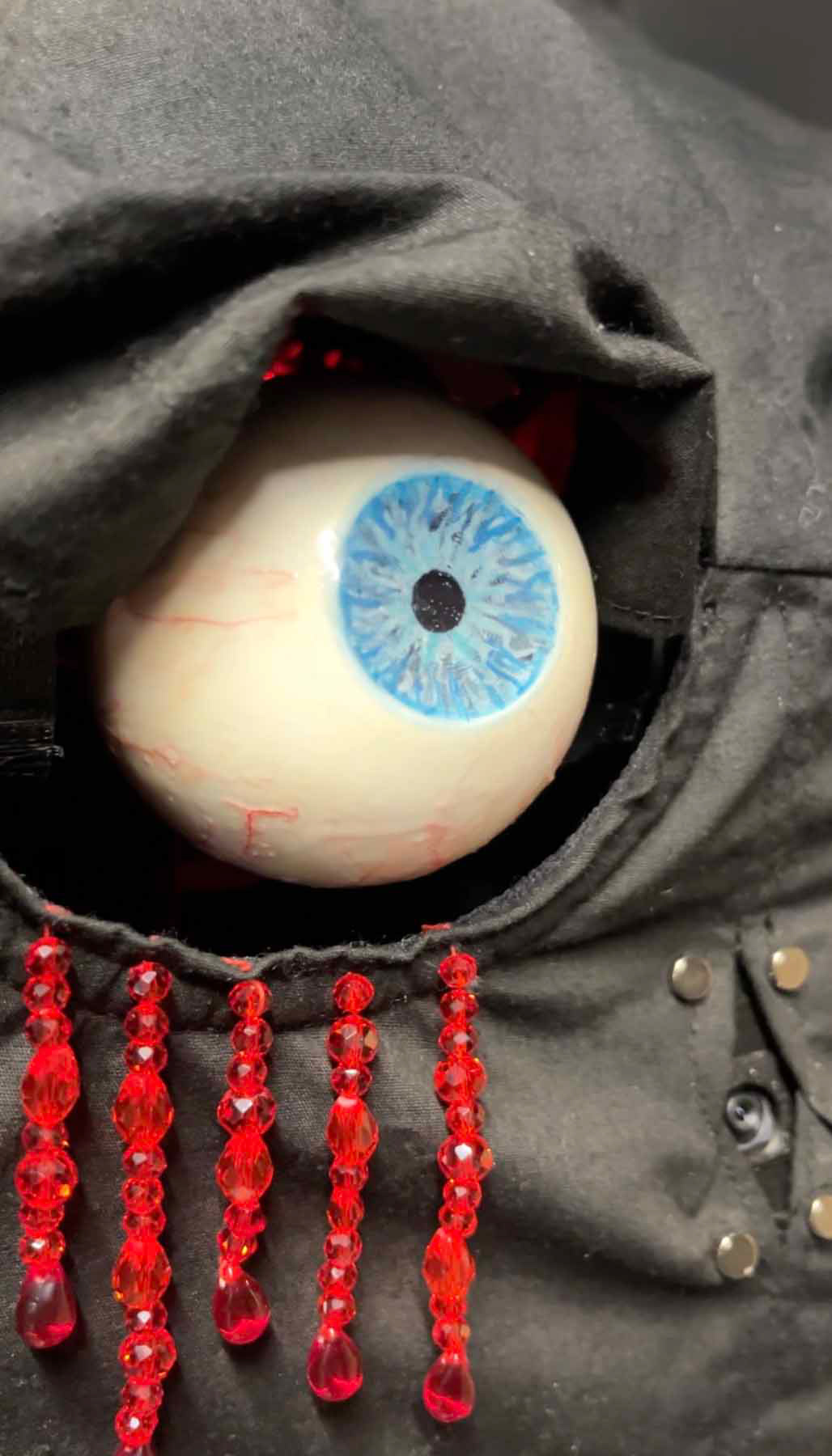
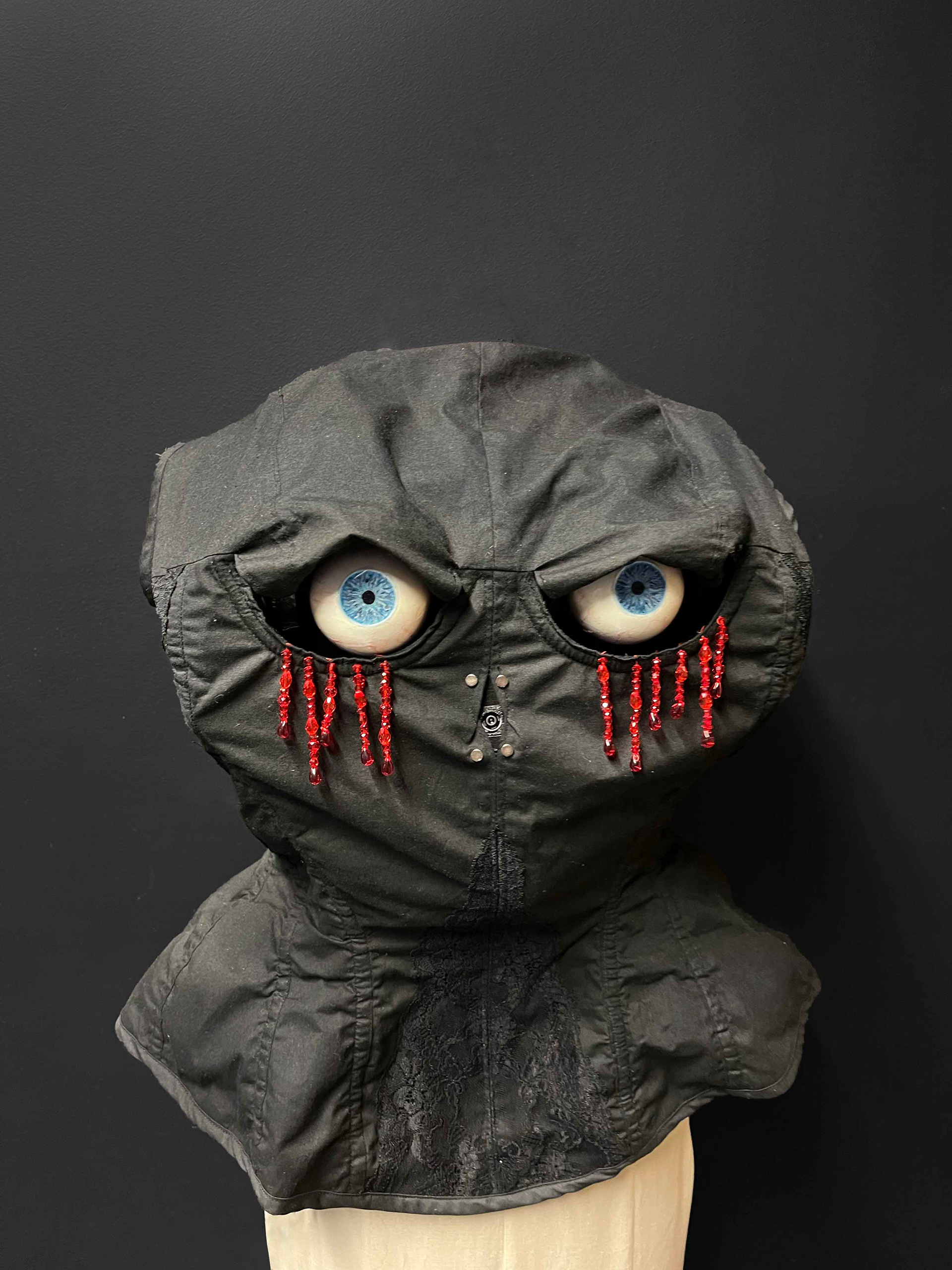
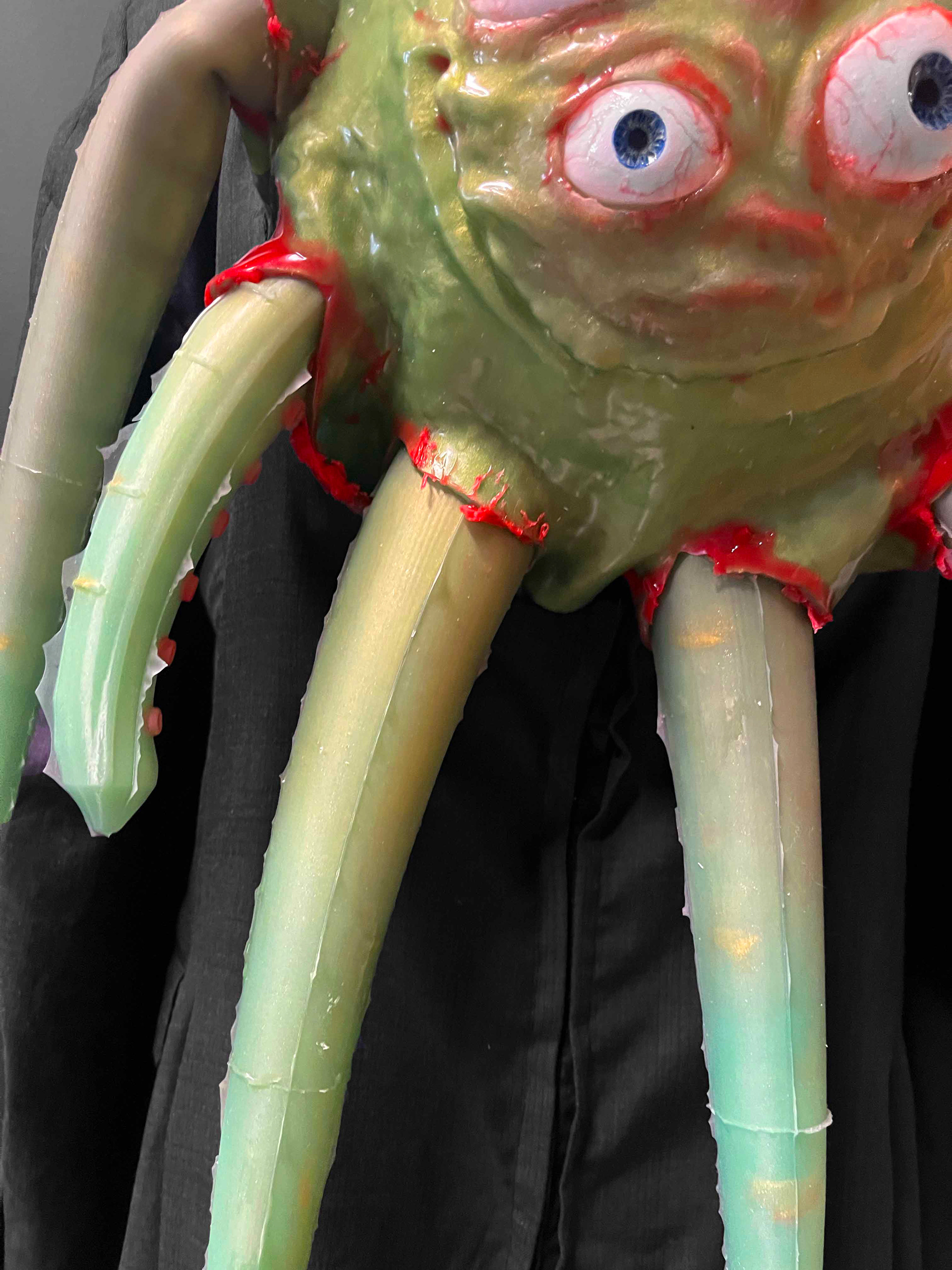
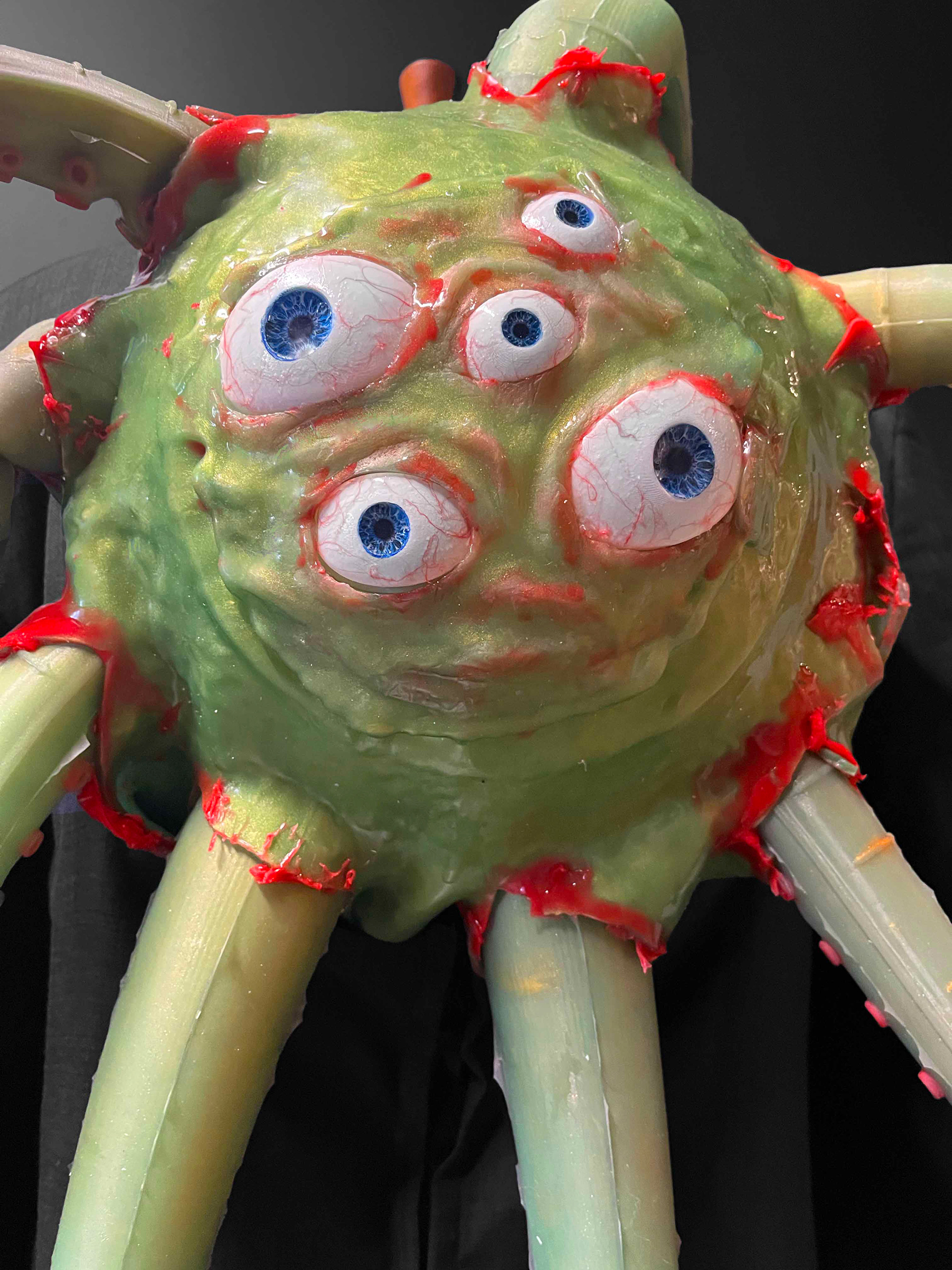
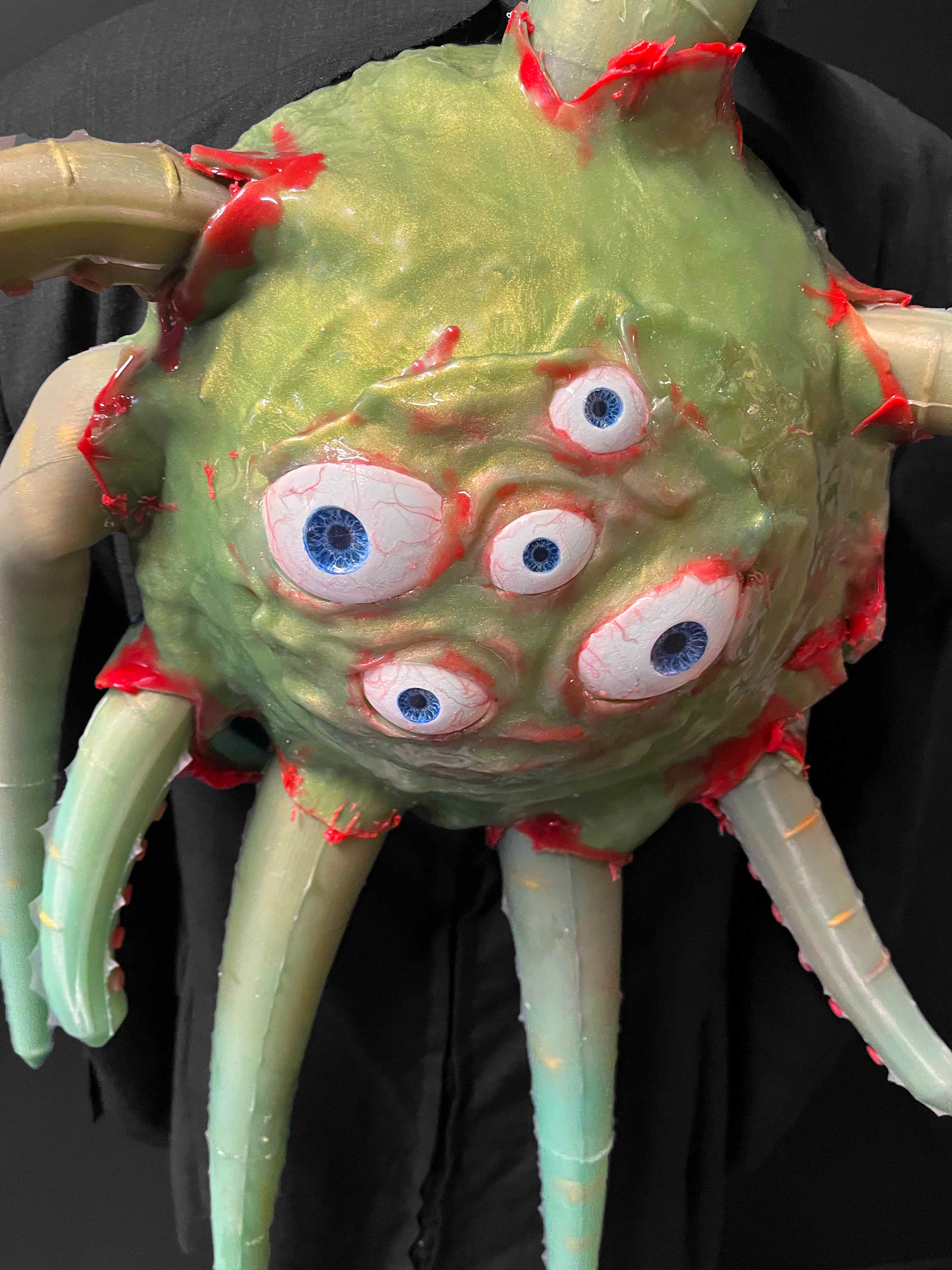
This garment uses Python and OpenCV to create a real-time gaze-tracking system. The act of looking triggers an immediate physical response: robotic eyes snap open and track the viewer’s face as they move. Building on the original mechanics of Monstrous Vision, I refined the internal assemblies to be more compact and efficient, allowing for a more seamless integration into the garment and a truly uncanny aesthetic. I also evolved the "Pervert Gallery" interface, applying a high-fidelity surveillance aesthetic to the digital archive to heighten the tension between the viewer and the viewed.
The Clutching Grip | Bio-mimetic Movement
The Technical Feat: Bio-mimetic movement through Soft Robotics and Hybrid Mechanics.
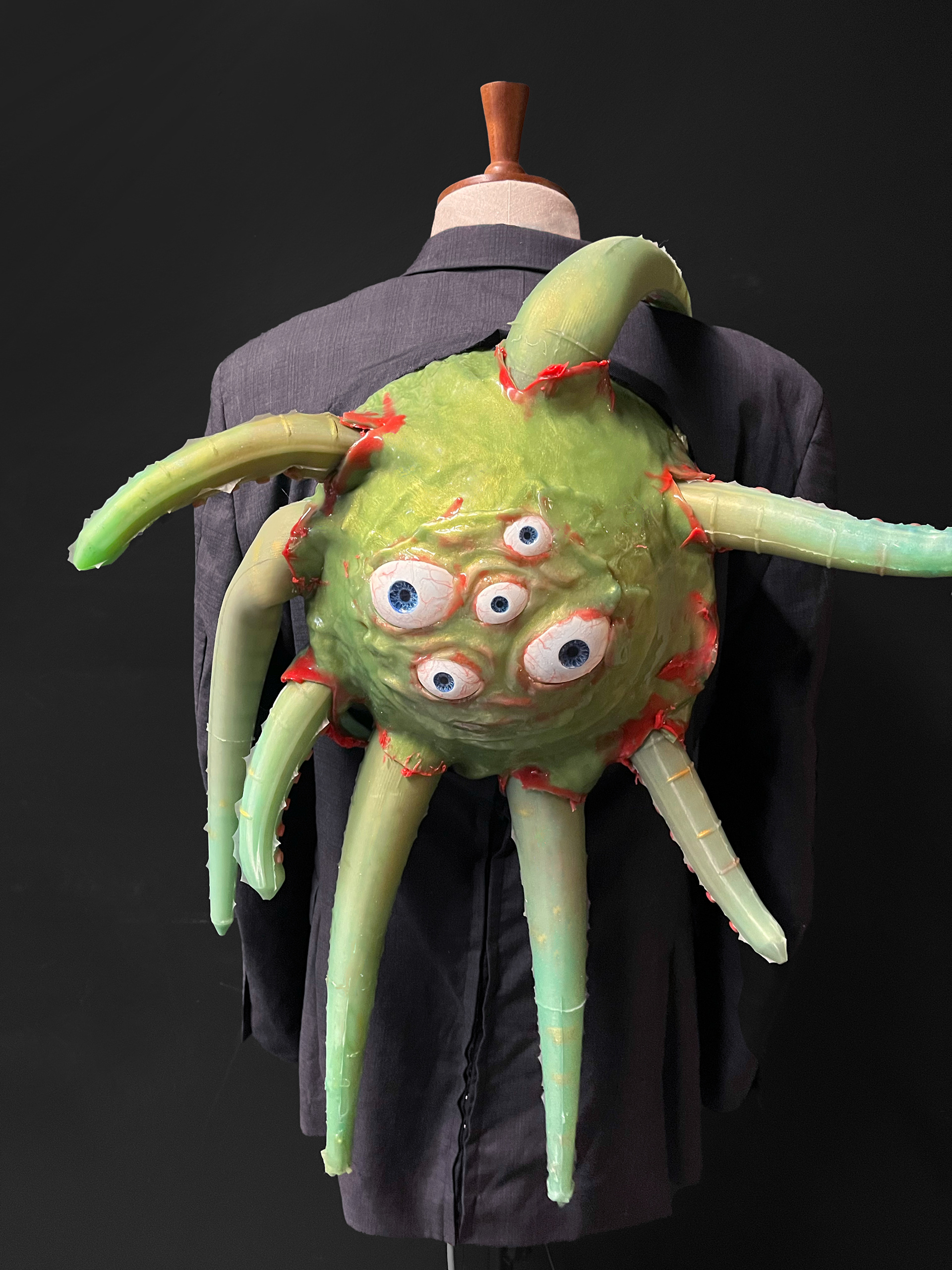
To achieve a lifelike, unsettling motion, I moved away from traditional rigid robotics and engineered custom soft robotic actuators. I cast internal air chambers into silicone forms, using pneumatic pressure to create a writhing, tentacular movement. This was paired with 3D-printed, "vertebrated" internal skeletons operating on a motorised pulley system to simulate nervous, twitching responses.
While the aesthetics are monstrous, the logic is that of a wearable conscience. The garment is networked to the computer vision system of The Stare; when a "pervert" is identified and captured, the tentacles are triggered to wrap around and constrict the wearer. This hybrid approach transforms the garment from a passive object into an active moral auditor, using twitching, air-driven kinetics to turn the wearer’s own body into a site of visible, physical accountability.
The Crawl | Speculative Interconnectivity & Intuitive Response
The Technical Feat: Exploring Cross-Garment Communication and Biometric Intuition.
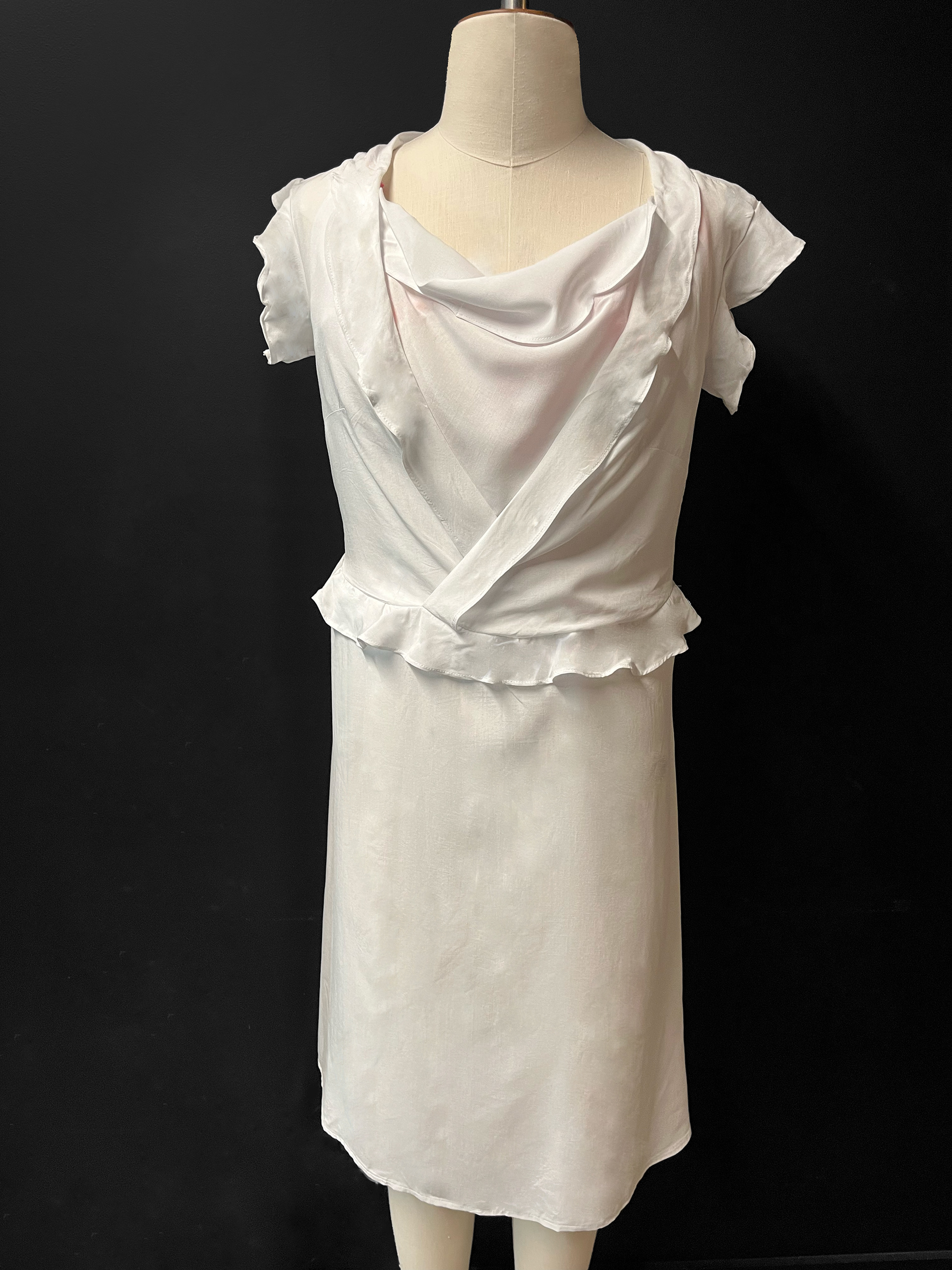
The Crawl represents the most speculative element of the trilogy, designed to respond not to external sensors, but to internal and environmental cues. In this ecosystem, the garment is triggered by "intuition", responding to the wearer's biometric shifts, such as a raised heartbeat or goosebumps. Furthermore, I explored a networked response system: if The Clutching Grip or The Stare are activated by a threat, they send a signal to The Crawl, causing the worms to writhe in a repulsive, defensive synchronicity. This moves wearable tech away from isolated gadgets and toward an integrated, intelligent "body-net."
Horror
Horror operates as the primary lens for The Case for Misandry, serving as both a conceptual framework and a tool for affective design. By drawing on body horror and the "monstrous," I use discomfort and revulsion to make visible the systemic experiences of surveillance and objectification. The writhing forms, blinking eyes, and abject materials are not merely for spectacle; they are designed to mirror the psychological realities of living under a constant threat. I mobilise horror to resist sanitised or neutral representations of technology, instead insisting on a visceral encounter that confronts the viewer with the emotional weight of the work.
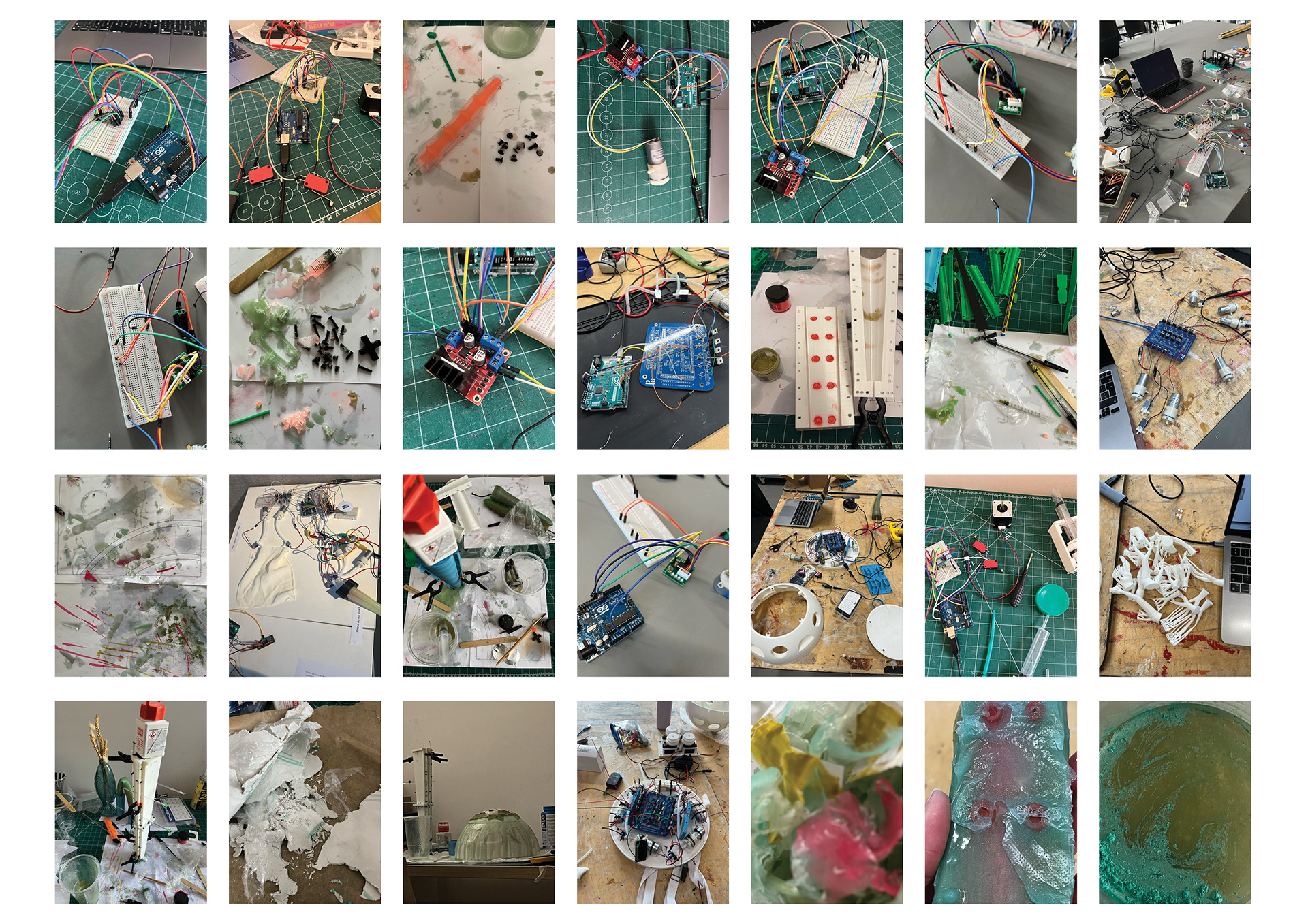
In a tech industry obsessed with "seamlessness" and "frictionless" UX, I intentionally embrace the glitch. This project was driven by a hands-on, iterative process of trial, failure, and repair. Soft robotics, AI systems, and hardware interactions were developed through "messy" experimentation where delays and unpredictability became integral to the narrative. This refusal of seamlessness positions technology as something intimate, invasive, and unstable mirroring the inherent unease embedded in patriarchal systems of oppression.